Unlocking Growth: The Importance of Process Mapping for Small Businesses
Most small businesses think about growth in terms of sales, marketing, or hiring. What often gets ignored is something more basic: how work actually gets done. Teams stay busy every day, but busy does not always mean efficient. When processes are unclear, small problems build up over time and slow everything down.
Why Processes Get Ignored
In many small businesses, processes live in people’s heads. Everyone “just knows” what to do. Because things seem to work, no one stops to write the steps down. As the business grows, confusion grows too. Tasks get repeated. Approvals take longer. Simple jobs become frustrating.
The Real Impact of Inefficiency
When workflows are messy, the whole business feels it. Employees waste time fixing mistakes or asking questions. Projects move slower than they should. Customers may notice delays. What looks like a people problem is usually a process problem. Over time, that affects productivity and profits.
What Process Mapping Actually Is
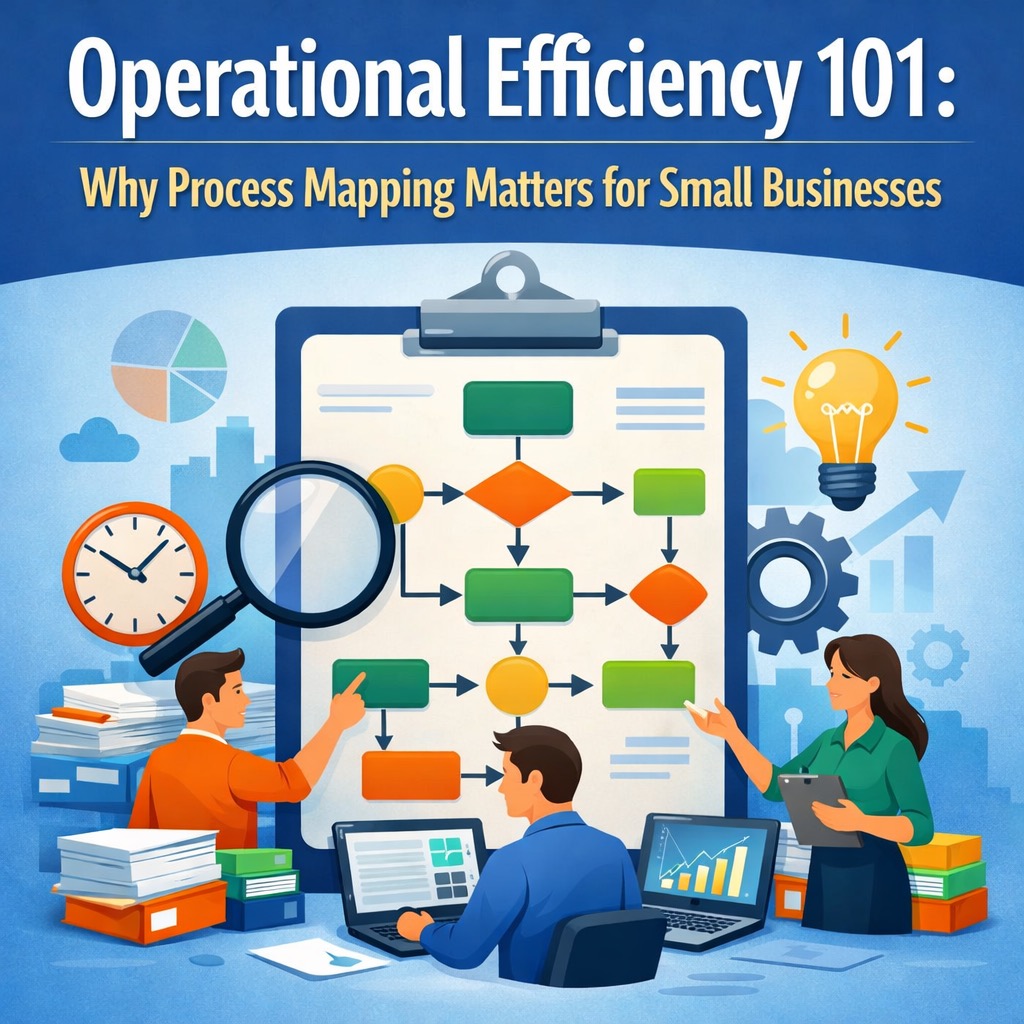
Process mapping is simply writing out each step in how work gets done from start to finish. It shows who is responsible, what tools are used, and where delays happen. When you can see the full picture, you can fix what is not working instead of guessing. It is not about adding extra rules; it is about creating clarity.
Why Clear Processes Matter for Growth
Informal systems might work when a company is small. But once you add more employees, customers, or technology, gaps start to show. Training becomes harder. Accountability becomes unclear. Growth feels stressful instead of exciting. Clear processes make growth smoother and easier to manage.
The Benefits of Process Mapping
Improved Efficiency
When processes are mapped out, teams can identify inefficiencies. This leads to streamlined workflows. Employees can focus on their tasks without unnecessary interruptions.
Enhanced Communication
Clear processes foster better communication among team members. Everyone knows their roles and responsibilities. This reduces misunderstandings and promotes collaboration.
Increased Accountability
With defined processes, accountability becomes clearer. Team members understand what is expected of them. This leads to higher performance and ownership of tasks.
Better Training and Onboarding
New employees can be trained more effectively when processes are documented. They can refer to the mapped workflows as a guide. This speeds up the onboarding process and helps new hires become productive sooner.
Scalability
As businesses grow, their processes must scale too. Process mapping allows for adjustments as the company expands. This ensures that operations remain efficient even as demands increase.
How Toledo Consulting Can Help
At Toledo Consulting, we help small businesses look at how their operations really function. By mapping workflows and finding bottlenecks, we turn confusion into structure and structure into growth.
When your processes are clear, your team works better, your technology supports you, and your business runs with less stress. Efficiency is not about working harder; it is about working smarter.
Conclusion
In conclusion, process mapping is a vital tool for small businesses aiming for growth. By clarifying how work gets done, companies can improve efficiency, communication, and accountability. As a result, they can scale effectively and thrive in a competitive landscape.
If you want to unlock your business's potential, consider investing in process mapping. It could be the key to your success.
For more insights on how to streamline your operations, check out Toledo Consulting & Contracting LLC.