
Elevate Your Restaurant Operations with Enterprise-Level Thinking
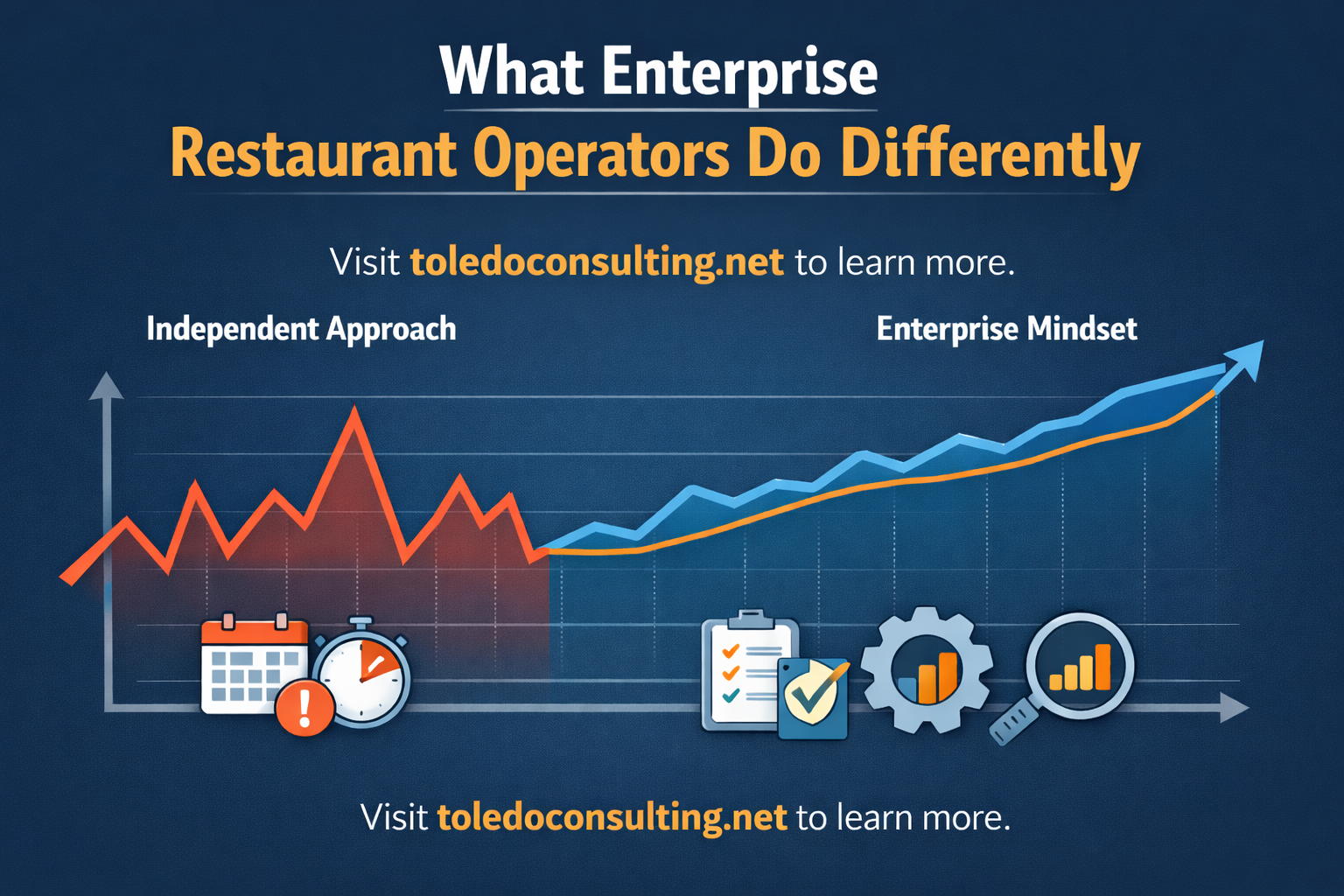
Independent restaurant operators work incredibly hard. They manage staffing, vendors, customer issues, digital platforms, and margins, often all in the same day. However, after working inside enterprise-level restaurant environments, one difference stands out:
Enterprise operators think in systems. Independents often operate in cycles. That distinction affects stability, profitability, and growth.
Understanding Weekly Performance
Enterprise teams absolutely review weekly numbers. They care about last week’s performance. The difference lies in context.
They don’t react to a single soft weekend in isolation. Instead, they compare it to rolling averages. They measure it against prior trends. They ask whether it’s noise or a signal.
A weak week doesn’t trigger panic. A strong week doesn’t trigger overconfidence. The week matters, but the trend determines action.
Focusing on Revenue Floors
A record Saturday feels great. But enterprise operators focus on something more important: the revenue floor. If a location consistently lifts its baseline, even modestly, that creates structural impact.
Labor planning improves. Inventory stabilizes. Cash flow becomes more predictable. Spikes are exciting, but higher floors are strategic. The real leverage is in raising what you can reliably expect, not just celebrating what occasionally happens.
Building Structure Over Relying on Effort
Independent operators often solve problems with sheer effort. When sales dip, they push harder. When costs rise, they cut quickly. In contrast, enterprise operators solve problems with structure.
They measure channel performance separately. They evaluate margins over time, not by emotion. They identify patterns before they become problems. It’s not about working less; it’s about removing guesswork. This discipline reduces volatility in an already unpredictable industry.
The Importance of Structure in Today's Environment
Today’s restaurant environment is layered with various elements: dine-in, delivery, digital ordering, third-party marketplaces, and public ratings. Managing this week-to-week without structure creates fatigue. However, managing it with systems creates clarity.
You don’t need 200 locations to think like an enterprise. You need visibility and discipline.
Bringing Enterprise Thinking to Independent Operators
At Toledo Consulting, we help independent and regional restaurant operators apply enterprise-level operational thinking without adding unnecessary bureaucracy. Our approach includes:
Clear performance reporting
Trend analysis alongside weekly accountability
Revenue channel clarity
Data-driven operational adjustments
Third-party analysis and reporting
The goal isn’t complexity; it’s control.
Taking Action
If you’re ready to move beyond merely reacting to the week and start managing the trend, let’s talk. www.toledoconsulting.net
Conclusion
In conclusion, embracing enterprise-level thinking can transform your restaurant operations. By focusing on systems rather than cycles, you can achieve greater stability and profitability. It’s time to elevate your approach and gain control over your business.
With the right strategies in place, you can manage your operations more effectively and drive growth. Don't hesitate to reach out for expert guidance tailored to your needs. Together, we can build a stronger foundation for your restaurant's future.