
The Hidden Risk Sitting on Every Laptop in Your Business
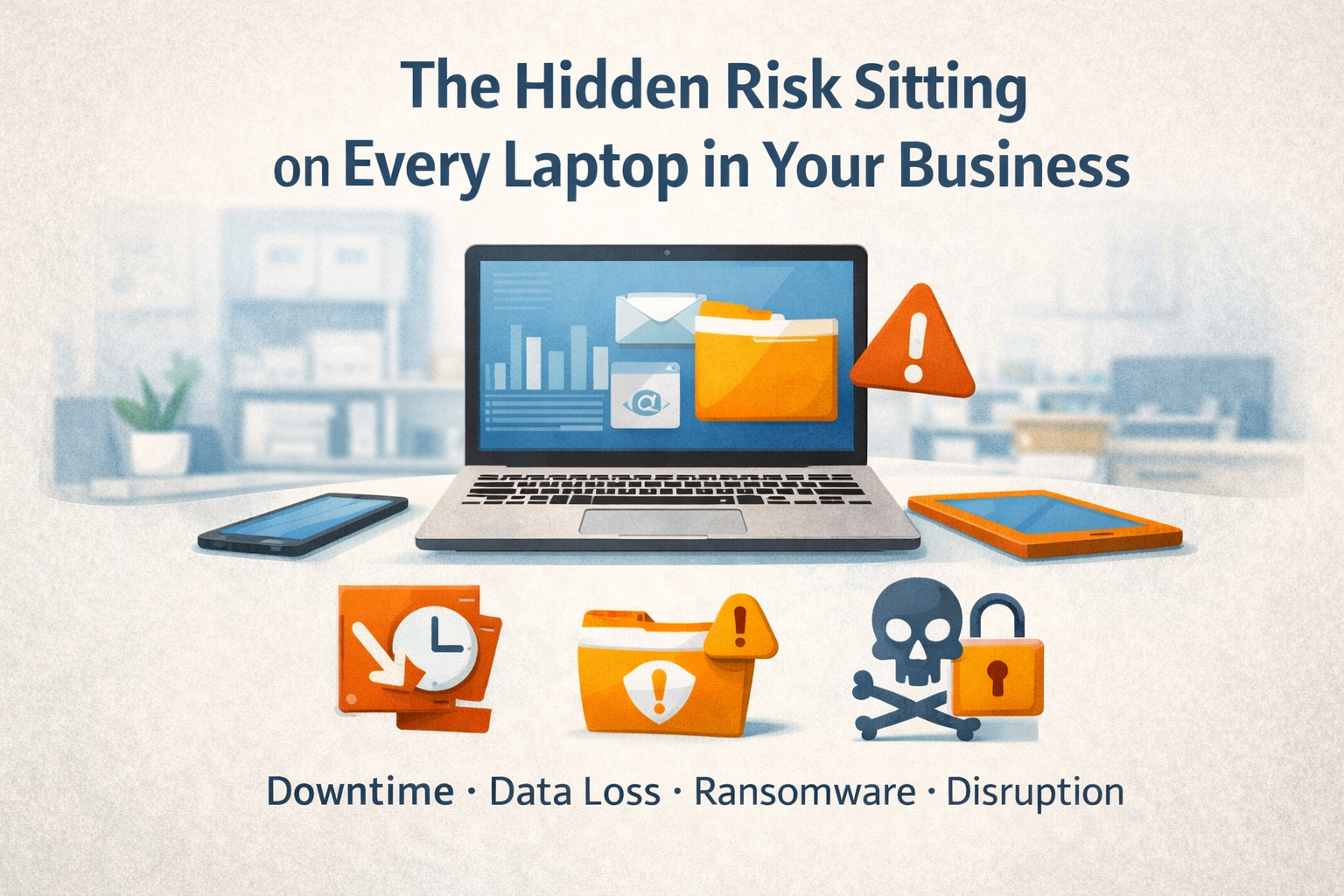
Most businesses think about risk in terms of finances, customers, or competition. What often gets overlooked is something much closer and much more common. Employee devices. Laptops, desktops, and mobile devices are used every day, and they quietly carry more risk than many business owners realize.
Why Employee Devices Are Often Overlooked
Employee devices feel familiar and harmless. They are tools people use to get work done, check email, and manage files. Because they are so normal, they rarely get treated as a risk. Many businesses assume basic protections are already in place or that problems will be obvious when they happen.
In reality, these devices are one of the most common entry points for business disruptions. A single laptop issue can affect an entire team if systems go down or files become unavailable.
The Real Business Impact of Unprotected Devices
When a device fails or gets compromised, the impact goes far beyond IT. Work stops. Employees cannot access files or systems. Customers experience delays. Projects miss deadlines.
Data loss is another major issue. Important documents, customer information, or internal records can be damaged or locked away. Recovering that data takes time and money, and sometimes it is not possible at all.
Ransomware incidents are especially disruptive. Even without technical details, the result is simple. Systems become unusable until the problem is resolved. During that time, productivity drops and stress rises across the business.
None of this requires a dramatic breach or headline making event. Many disruptions start small and grow because protections were outdated or incomplete.
What Endpoint Protection Really Means
Endpoint protection sounds technical, but the idea is simple. An endpoint is any device that connects to your business systems. Endpoint protection is how those devices are monitored and protected so problems can be detected early and contained quickly.
Good endpoint protection helps prevent harmful software, flags unusual activity, and reduces the chance that one device can cause widespread issues. It works quietly in the background and supports business continuity rather than drawing attention to itself.
This is not about creating fear. It is about recognizing that devices are part of the business infrastructure, just like internet access or payroll systems.
Why Basic Protection Is Often Not Enough
Many businesses rely on basic settings or outdated tools and assume they are covered. The problem is that work has changed. Employees work remotely, use cloud systems, and move between networks more than ever.
Protection that was good enough a few years ago may no longer match how the business operates today. Gaps appear slowly, and they are easy to miss until something breaks.
A Smarter Way to Think About Risk
The goal is not to panic or overreact. The goal is awareness. Business owners should understand what devices are in use, how they connect to systems, and whether current protections match real day to day operations.
Asking simple questions can reveal a lot. What happens if a laptop is lost. How quickly could work continue if a device goes down. Are protections actively monitored or just assumed to be working.
How Toledo Consulting Can Help
Many business owners know device risk exists but are unsure how to evaluate it without getting lost in technical details. Toledo Consulting helps businesses look at endpoint protection from a business risk perspective, not a fear based one.
By focusing on operations, productivity, and continuity, businesses can assess whether their current protections are truly adequate. When devices are properly protected, they support the business instead of quietly putting it at risk.